Low-APR personal loans: How to qualify and where to find them

A low-APR personal loan in 2026 means an APR below the average credit card APR of 21.52% (https://www.federalreserve.gov/releases/g19/current/) – achievable for borrowers with good to excellent credit.
Your credit history and score are among the primary factors lenders use to determine your APR: the gap between a fair and an excellent credit profile can translate to several percentage points of APR difference, which compounds meaningfully over a multi-year loan term.
Happen Bank's Direct Pay discount can reduce APR by 0.75%–8% for qualifying debt consolidation borrowers2 – reduction applied at origination, on top of the interest savings from consolidating high-APR card debt.
Typically, pre-qualifying with multiple lenders using soft pulls costs nothing and could take seconds4 – it's the most direct way to find your actual best available rate.
If you don't have an immediate need, focused credit improvement before applying can produce a meaningfully better offer. Run the numbers on the delay cost before deciding.
Personal loan APRs vary significantly depending on your credit profile, the lender, and the loan terms you select. That gap translates directly into how much interest you pay over the life of the loan. Understanding what determines where you land, and what you can do to move toward a lower rate, is what this article covers.
What could count as a "low" personal loan APR in 2026?
The word "low" is relative, and it's most useful when measured against two benchmarks.
The first is the average credit card APR of 21.52% as of Q1 2026. For borrowers consolidating credit card debt, any fixed loan APR below that rate represents potential interest savings.
The second benchmark is the APR borrowers typically qualify for based on their credit score. Based on aggregate pre-qualification data from NerdWallet users as of July 1, 2026, here is what borrowers in each credit score range generally see:
Credit score range | Typical personal loan APR |
720–850 (Excellent) | 14.52% |
690–719 (Good) | 18.82% |
630–689 (Fair) | 22.67% |
300–629 | 26.10% |
Averages based on aggregate pre-qualification data from NerdWallet users as of July 1, 2026. Your actual APR will vary based on lender, loan amount, term, and credit profile. Source: nerdwallet.com/personal-loans/learn/average-personal-loan-rates
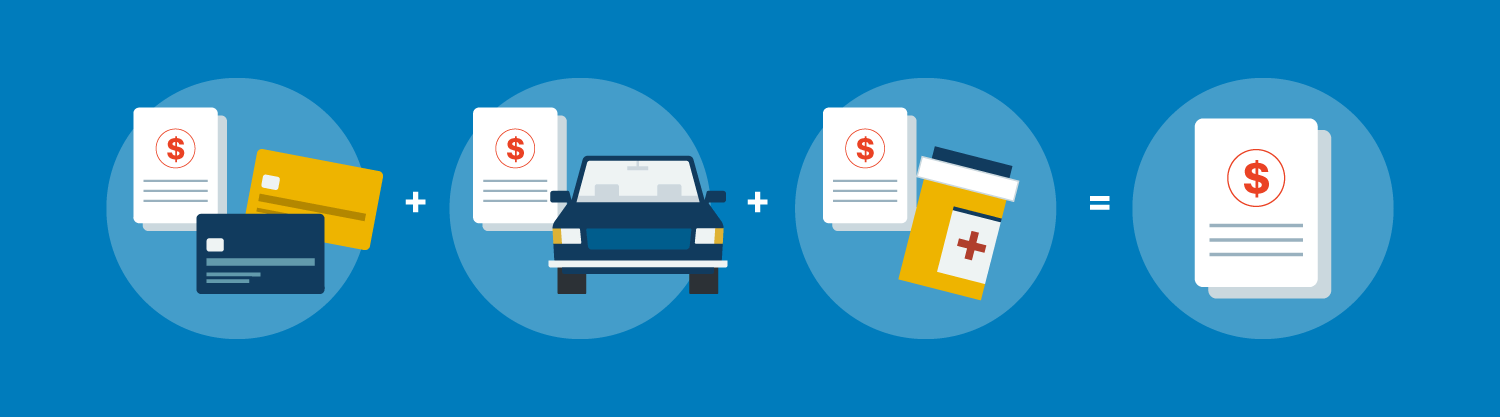
A borrower with a good credit score, 690–719, for example, who qualifies near the 18.82% average in the table above is already paying less than the 21.52% most credit card holders carry. The savings come from three places: a lower rate from day one, a fixed monthly payment that actually chips away at your balance on a set schedule rather than the slow crawl of credit card minimums, and rate certainty. Credit card rates can rise with market conditions; a personal loan locks your rate when you sign, so your payment and payoff date stay fixed for the life of the loan.
The practical question isn't just "Is this low?" It's "Is this lower than what I'm currently paying, and does the math on consolidating provide an opportunity for interest savings?"
What drives your personal loan APR?
Four factors typically determine the APR you qualify for:
Credit score and profile are usually your biggest APR drivers. Based on the table above, the average APR difference between the Fair tier (630–689) and Excellent tier (720+) is approximately 8 percentage points: the lever with the most upside and the one most within your control with focused credit management before you apply.
Debt-to-income (DTI) ratio is a measure of how much of your monthly income already goes toward debt payments. If that share is high, paying some of it down before you apply can put you in a stronger position. It is generally recommended to keep your credit utilization below 30%.
an important factor for most lenders. If monthly debt payments consume a large share of your gross income, lenders price that risk into your APR. Paying down revolving balances before applying can improve both your DTI and your credit score simultaneously.
Loan term has a direct relationship with APR: shorter terms generally carry lower APRs. The trade-off is a higher monthly payment. If you can afford the monthly payments, a shorter term typically saves money on both the APR and the total interest paid over the life of the loan.
Lender model can matter more than many borrowers realize. Different lenders price risk differently, use different models, and serve different credit profiles. Pre-qualifying with multiple lenders is the only way to find which one offers the best APR for your specific profile.
How Happen Bank can save you time and may lower your APR with Direct Pay
With Direct Pay, Happen Bank sends your loan funds directly to your eligible creditors on your behalf. You don't have to make separate payments or coordinate with each creditor. Eligible borrowers receive an APR discount of 0.75% to 8% for using Direct Pay to pay off qualifying debt.1 It's a simple way to pay off multiple credit cards, save time, and potentially lower the cost of your loan.
Happen Bank personal loans are available from $1,000 to $75,000, with terms from 24 to 84 months, and APRs as low as 6.53%.2
Six steps to qualify for the lowest APR available to you
1. Know your credit score before you start. Checking your credit score lets you understand where you stand and helps you assess what APRs are realistic.
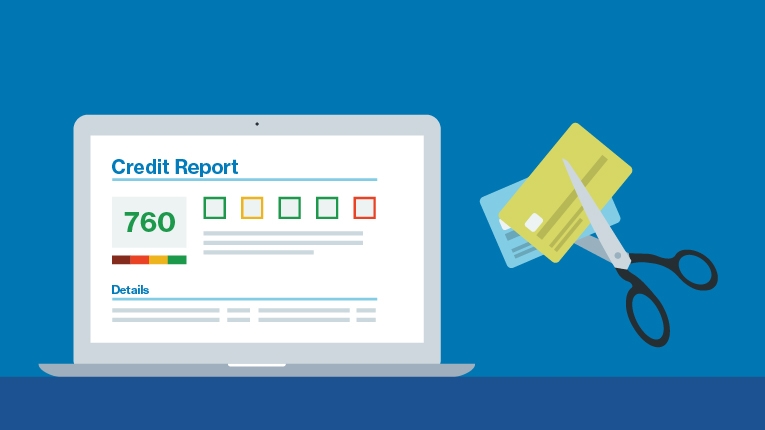
2. Check your credit report for errors. Fixing inaccurate information and red flags on your credit report can help you improve your score.
3. Pay down revolving balances. Credit utilization – your balance as a percentage of your credit limit – is generally the fastest-moving factor in your score. Getting below 30% on each card can produce a visible score improvement.
4. Avoid opening new credit accounts in the period before applying. New accounts generally add hard inquiries and reduce your average account age, both of which can temporarily lower your score.
5. Pre-qualify using soft pulls. Pre-qualification generally has no impact on your credit score.3 Seeing real offers side by side – rather than guessing from advertised APR ranges – is the most direct way to find your best available APR, and it can take seconds.4
6. Choose the shortest term you can comfortably afford. If you can manage the higher monthly payment of a shorter term, that gap may be worth it in total interest saved.
Other Considerations
If you're able to pay off your loan early, you'll typically pay less in interest. However, some lenders may charge prepayment fees or penalties, which can reduce or eliminate those savings.
When comparing loan options, check whether the lender charges a prepayment penalty, especially if you think you may pay off the loan ahead of schedule. Choosing a loan without a prepayment penalty can help lower your total borrowing cost. Happen Bank does not, so early payoff reduces your total interest cost with no penalty attached.
Is it worth waiting to get a lower APR?
If your credit score has room to improve, waiting before applying can produce a meaningfully better offer. Focused credit management – paying down utilization, disputing errors, and avoiding new applications – can move a score higher, and even a modest APR reduction compounds into real savings over a multi-year loan term.
The decision comes down to a direct cost comparison. The interest saved by improving your credit before applying needs to exceed the cost of the delay – the interest continuing to accrue on existing balances during the waiting period. If it does, waiting makes financial sense. If the delay costs more than the rate improvement saves, applying now and refinancing when your score improves is the better path.
For consolidation borrowers this trade-off is especially concrete: high-APR card balances continue accruing interest while you wait for a lower loan APR. Run the numbers both ways before deciding.
Frequently Asked Questions
What is considered a low APR on a personal loan in 2026?
A fixed personal loan APR below the average credit card APR of 21.52% could potentially represent a meaningful improvement for a consolidation borrower. For borrowers with excellent credit (720+), APRs in the 14%–15% range are generally considered achievable. For good credit (690–719), 18%–19% can be a realistic target. What counts as "low" is relative to what you're currently paying – the useful comparison is your loan APR vs. your weighted average card APR.
How can I get a lower APR on a personal loan?
Improve your credit score by paying down revolving balances below 30% utilization and disputing any credit report errors. Lower your DTI before applying. Choose the shortest loan term you can comfortably afford; and pre-qualify using soft pulls to compare real offers.3 If you're consolidating card debt, check whether the lender offers a Direct Pay discount – Happen Bank's Direct Pay can reduce APR by 0.75%–8% for qualifying borrowers.1
Does a shorter loan term come with a lower APR?
Generally, yes – a shorter term will usually carry a lower APR than a longer term with the same lender for the same borrower. The trade-off is a higher monthly payment. If you can manage it, a shorter term saves money on both the APR and the total interest paid.
Disclosures
The APR discounted rate is a discount that some customers may receive for taking out a loan to pay down existing qualifying debt paid directly by Happen Bank; such rate is discounted from the rate given for taking a full cash loan. Not all applicants will qualify for the discount. Any actual discount rate will be determined at the time of application. The best APR discounts may be available to borrowers with excellent credit. Advertised discounted rates are subject to change without notice.
For Personal Loans, APR ranges from 5.96% APR to 35.99% APR and origination/processing fee ranges from 0.00% to 8.00% of the loan amount.APRs and origination/processing fees are determined at the time of application. The lowest APR may be available to borrowers with excellent credit, subject to additional factors including, but not limited to, loan amount, loan term, and sufficient investor commitment. Advertised rates and fees are valid as of July 06, 2026, are subject to change without notice, and may not be available for all Personal Loan products and/or through all application channels or platforms.
A representative example of payment terms for a Personal Loan is as follows: a borrower receives a loan of $15,262 for a term of 36 months, with an interest rate of 13.99% and a 6% origination fee of $916, for an APR of 18.40%. In this example, the borrower will receive $14,346 and will make 36 monthly payments of $522. Loan amounts range from $1,000 to $75,000 and loan term lengths range from 24 months to 84 months. Some amounts, rates, and term lengths may be unavailable in certain states, and may not be available for all Personal Loan products and/or through all application channels or platforms.Checking a rate through us generates a soft inquiry on a person's credit report, which generally does not impact that person's credit score. A hard credit inquiry, which may affect that person's credit score, only appears on the person's credit report if and when a loan is issued to the person.
Between April 2026 and June 2026, 76% of Happen Personal Loans offers were generated in under a minute from the beginning of the application process.
Related Terms
References
https://www.federalreserve.gov/releases/g19/current/
https://www.nerdwallet.com/personal-loans/learn/average-personal-loan-rates
https://experian.com/blogs/ask-experian/credit-education/score-basics/credit-utilization-rate/
https://www.myfico.com/credit-education/credit-scores/new-credit
You May Also Like