{noun} A type of credit that allows the borrower to make charges and payments against a set borrowing limit, paying interest only on outstanding balances.
Revolving Credit
September 7, 20234 min read
A type of credit that allows the borrower to make charges and payments against a set borrowing limit, paying interest only on outstanding balances.
What is Revolving Credit?
Revolving credit is a type of credit that lets you borrow money as needed up to an amount called your credit limit. Borrowing reduces your available credit, and repayment replenishes your credit limit (minus the interest and fees charged). Revolving credit does not have a fixed number of payments. This differs from installment credit which lets you borrow a lump sum and pay it back over a set number of fixed monthly payments.
How Does a Revolving Line of Credit Work?
It helps to think of a revolving line of credit as a renewable source of funds within a set credit limit. The lender sets the credit limit upon application approval. You can use as much of your credit limit as you need, paying interest only on the money you borrow. As you repay what you’ve borrowed (plus interest and fees), your available credit replenishes, and you can continue borrowing against your revolving line up to the credit limit.
Types of Revolving Credit
The most common revolving credit products are lines of credit and credit cards.
Lines of credit come in different forms, including home equity lines of credit (HELOCs), personal lines of credit, and business lines of credit. Credit lines are typically issued by banks and credit unions, and generally you can draw on your line using special checks, ATM, telephone, and online banking. You’ll only pay interest on the money borrowed from your line of credit.
Some lines of credit may be limited in how the funds can be used, such as only for balance transfers from credit cards.
Credit cards are revolving credit accounts that, unlike lines of credit, require you make a purchase or cash advance to access your credit line. While card issuers reserve the right to change your credit limit, you can access your available credit as long as your account is in good standing. When you make purchases on a credit card, you can repay the balance in full by the end of your billing cycle to avoid interest charges and fees. If you don’t pay your outstanding balance in full,the balance “revolves,” or rolls over, to the next month and will accrue interest until paid in full.
Note: Both lines of credit and credit cards can be secured or unsecured. Secured accounts require collateral; unsecured accounts do not. For example, a HELOC uses your home as collateral. Credit cards are typically unsecured, but some secured cards require cash deposits as collateral.
Why is Revolving Credit Important?
Revolving credit offers greater borrowing flexibility than installment credit. For instance, if you get a $10,000 installment loan for a home remodeling project, you typically receive all the money at once and must start repaying on the entire loan balance immediately plus interest on that amount—even if you don’t use the funds right away. If you need more money, you’ll have to apply for a new loan.
On the other hand, if you get a line of credit or credit card with a $10,000 limit, you can draw on it as needed—say, $1,000 in January, $2,000 in April and $1,500 in June—and interest will accrue only on the amounts you borrow. As you pay back what you’ve borrowed, your available credit is restored up to your credit limit, so you can make future purchases without needing to apply for additional credit.
Since it doesn’t require fixed monthly payments, revolving credit can also offer greater payment flexibility than installment loans. If money is tight in a particular month, you have the option of only making the minimum payment on a revolving account, potentially making it easier to meet other financial obligations.
Revolving credit can also serve as a financial cushion. Even if you never use it, it’s there in case you need quick access to small amounts of cash in an emergency.
What Are the Risks of Revolving Credit?
Revolving credit has some drawbacks you should be aware of.
Collateral risk: If you fail to make payments on a secured revolving credit account, you could lose your collateral. With a secured credit card, that loss could be a few hundred dollars. With a HELOC, you stand to lose your home.
High interest rates: Revolving credit typically has higher interest rates than installment credit. Interest rates for most credit cards and many lines of credit are also variable, meaning they can change over time based on economic conditions.
Excessive debt: If you only make the minimum payment on a credit card, you could accumulate a large balance. Credit card interest is typically compounded, meaning interest accrues on both the balance of your purchases and on previously applied interest. Compound interest can cause your balance to snowball until it’s difficult to pay down.
How Does Revolving Credit Affect Your Credit Score?
Revolving credit could help your credit score in several ways.
On-time payments: Making revolving credit payments on time could boost your credit, since timely payments are a major factor in your FICO® Score.
Responsible credit utilization: Keeping your revolving credit balance below 30% of your credit limit could increase your credit score. Ideally, you would pay your credit card balances in full each month.
Diverse credit mix: A variety of accounts, including installment credit and revolving credit, could show lenders you can successfully manage different types of debt.
Revolving credit could also have negative impacts on your credit score when not managed responsibly.
Late payments: Missing payments could have a significant negative impact on your credit score. Setting up auto-payments on your revolving credit accounts can help ensure you never miss a due date.
Excessive credit utilization: Consistently carrying balances that exceed 30% of your available credit limit can reduce your credit score.
Hard inquiry: When you apply for revolving credit, creditors perform a credit check called a hard inquiry, which could cause a small, temporary dip in your credit score.
You May Also Like
Related Articles
With direct creditor payment, funds from your debt consolidation loan are disbursed to your outstanding accounts rather than being deposited into your bank. Some lenders offer an APR discount for borrowers who choose this feature. Here are five lenders that offer direct pay options.

Debt consolidation combines multiple high-APR debts into a single payment—ideally at a lower APR, with a defined end date. It can help save money and simplify your finances, but whether it makes sense depends on your credit profile, the APR you can qualify for, and your ability to avoid new debt after consolidation.
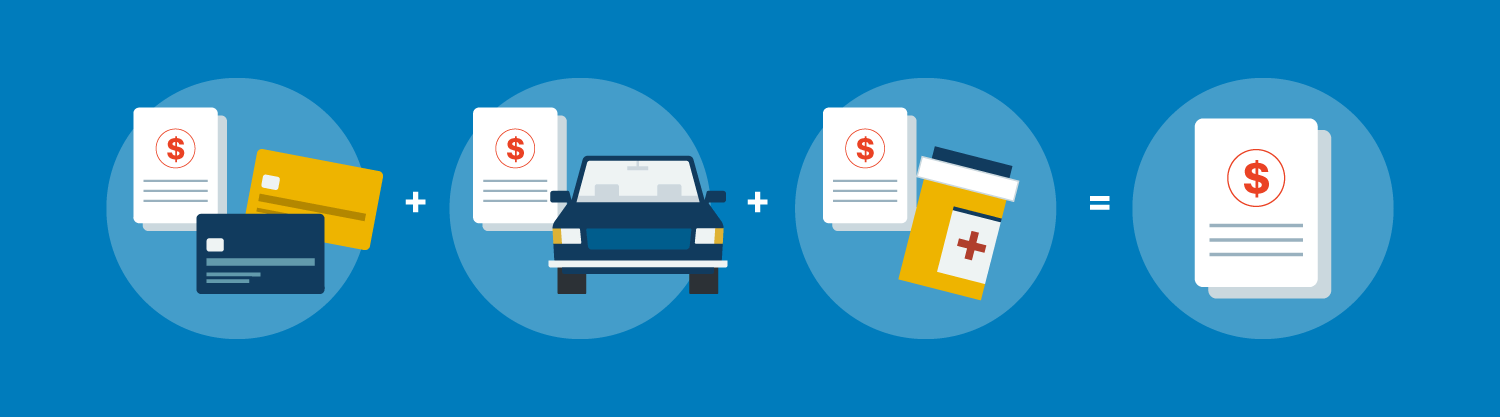
Debt consolidation replaces multiple high annual percentage rate (APR) balances with one fixed-APR personal loan. Before applying, knowing exactly what is owed, verifying that it actually saves money, checking your credit score, gathering documents, and checking your rate to see the actual APR before committing are important steps. This guide walks through each step in order.
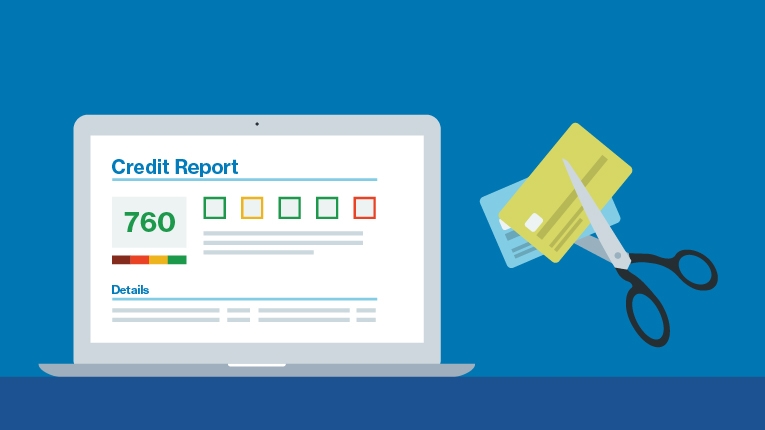
Applying for a personal loan may affects your credit score differently at each stage of the process: from the initial rate check through to full repayment. A personal loan can affect a credit score positively or negatively over time, depending upon several factors.

When you consider taking out a personal loan, there are two ways in which your rate can be structured. The choice affects not just your monthly payment, but the total cost of borrowing over the full term, particularly if your loan runs several years.
Related Impact
Today, we are thrilled to announce the completion of our acquisition of Radius Bancorp, Inc. (“Radius”). In February 2020, we announced our intent to acquire Radius and shared how we can grow and deepen our customer relationships with a marketplace bank.

Today, we are thrilled to announce the completion of our acquisition of Radius Bancorp, Inc. (“Radius”). In February 2020, we announced our intent to acquire Radius and shared how we can grow and deepen our customer relationships with a marketplace bank.
Related FAQ's
You can view and manage most of your account information by signing in on the web or using the Happen Bank mobile app, including your password, phone number, physical address, loan documents, payment methods, and two-factor authentication settings.
Contact our team at 833-498-1399.
The Society for Worldwide Interbank Financial Telecommunication (SWIFT) Code is a unique identification code that may be required by some banks, broker-dealers, and investment managers for the completion of international wire transfers.
Personal Banking Customers: Our Elite and Reserve Tier customers can place a wire via Online banking or the Happen Bank Mobile app. For all other customers, they can reach out to Customer Service at 800.242.0272 to initiate a wire.
LevelUp Savings is a high-yield savings account that rewards you with a higher LevelUp Rate when you make deposits of at least $250 per statement cycle.
Related Glossary
{noun} The amount of unpaid interest that has accumulated as of a specific date, either on a loan or an interest-bearing account or investment.
{noun} The total annual cost to borrow money, including fees, expressed as a percentage.
A debt that is written off as a loss because the financial institution or creditor believes it is no longer collectible due to a substantial period of nonpayment.
{noun} An interest rate that remains the same for a set time, usually for the life of the loan.
{noun} A loan used to pay off one or more debt accounts, usually to change interest costs, monthly payment, and/or payment term.