Credit card consolidation loans: How to pay off multiple cards with one fixed rate

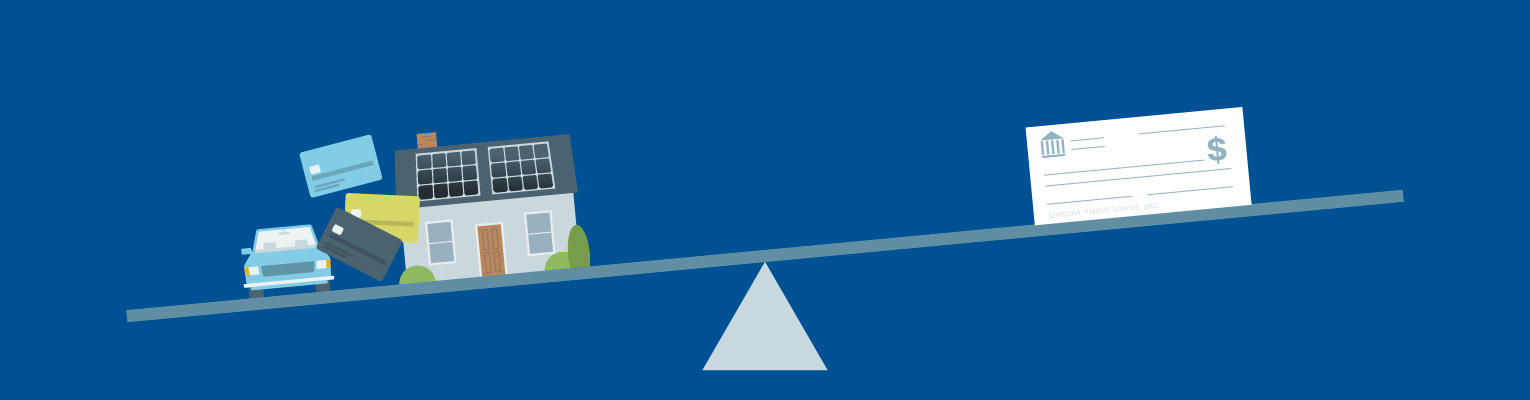
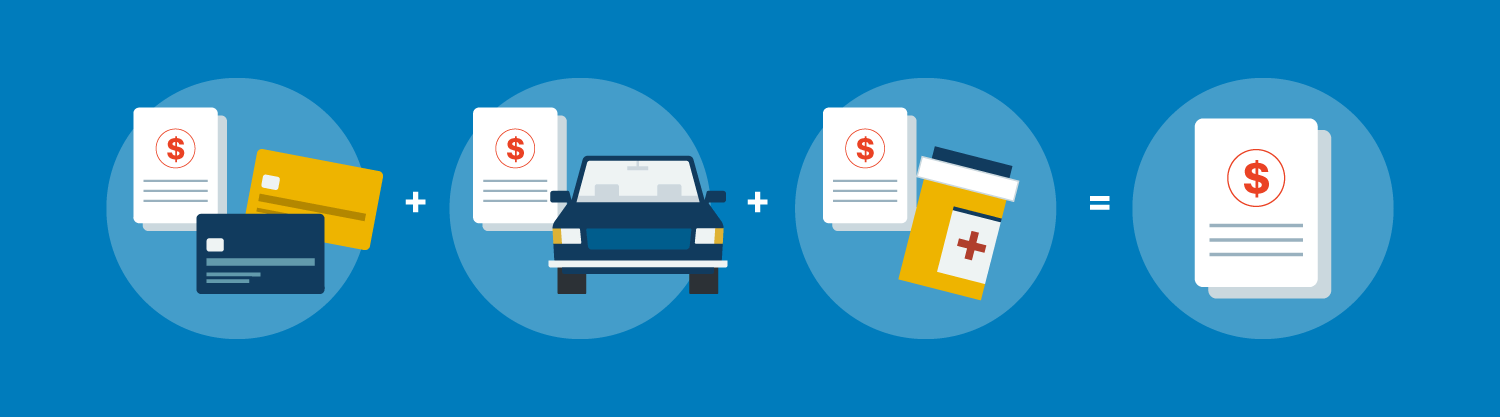
A credit card consolidation loan replaces multiple variable-rate card balances with a single monthly fixed-rate payment and a defined payoff date
Consolidation generally makes sense for the same term when your loan APR is lower than your weighted average card APR and if the fixed monthly payment fits your budget; on small balances, check that total interest saved in dollar terms justifies the cost of consolidating.
Paying off revolving card balances drops your credit utilization, which is typically the fastest-moving factor in a credit score improvement.
Checking your rate generally has no impact on your credit score2. The hard credit inquiry only occurs when a loan is issued to you.
Happen Bank's Direct Pay feature reduces APR by 0.75%–8% for qualifying borrowers who route funds directly to eligible creditors3. It was also rated the best personal loan for debt consolidation by Nerdwallet in 20264.
If you're carrying a $18,500 balance across credit cards at 21.4% APR, it’ll cost over $6,700 in interest to clear in three years. Shift that same balance into a 17.6% fixed-rate credit card consolidation loan to save approximately over $1,2501!
What is a credit card consolidation loan, and how does it work?
A fixed-rate credit card consolidation loan pays off your card balances, replacing revolving debt – which has no defined end date and compounds interest on whatever you carry – with an installment loan that has a fixed rate, fixed monthly payment, and a set payoff date.
There are two ways the funds get to your creditors. With a credit card consolidation loan, the money is deposited into your account and you pay each card directly. With Happen Bank's Direct Pay, the funds go straight to your named creditors at origination.
How Direct Pay works: Rather than receiving the loan funds yourself, you designate the qualifying creditors and balances at application. Happen Bank pays them directly. Qualifying borrowers receive an APR discount of 0.75% to 8%3 for using Direct Pay. This also removes the temptation or risk of redirecting the funds.
There's a credit score dimension worth understanding too. Paying off revolving balances reduces your credit utilization – typically the fastest-moving factor in a credit score – and adding an installment loan diversifies your credit mix. Direct Pay borrowers from Happen Bank who consolidated at least 51% of their qualifying debt saw an average FICO score increase of 35 points within three months.5
Consolidation loan vs. your other options
A credit card consolidation loan isn't the only option available. Here's how the main options compare:
Method | APR | Fixed or Variable APR | Collateral | Key consideration |
Credit card consolidation loan (Happen Bank) | 6.53%–35.99% APR6 | Fixed | None | Direct Pay discount; defined payoff date |
Balance transfer card | 0% intro, then 18–28% (Source: https://www.bankrate.com/credit-cards/balance-transfer/best-balance-transfer-cards/) | Variable after promo ends | None | Promo cliff risk; requires good credit |
HELOC | Variable, often lower at first, then changes with market conditions | Variable | Your home | Approval takes weeks; home at risk |
HELOAN or Home Equity Loan | Fixed, often slightly higher than variable rate. | Fixed | Your home | Requires equity; home at risk |
Debt Management Plan | Reduced interest via negotiation | Varies | None | Best for borrowers struggling to pay |
If your 0% intro APR has expired and your card APR has jumped, a personal loan replaces that variable rate with a fixed one that doesn't change for the life of the loan. And unlike a HELOC or home equity loan, a personal loan is unsecured: your home is not on the line.
Should you consolidate? Run the numbers first
Consolidation makes sense for most borrowers carrying high-interest card balances, but the numbers have to work. Here are four questions you should reflect on:
1. Is your consolidation loan APR lower than your current weighted average card APR? This is the non-negotiable. If your loan APR is higher than your average card APR, consolidation costs you money. The average credit card APR is 21.39%1 as of Q1 2026; any fixed personal loan APR meaningfully below that represents real savings for a consolidation borrower.
2. Can you comfortably afford the fixed monthly payment? A shorter term reduces total interest but raises the monthly payment. Run both scenarios and choose the term that's genuinely manageable, not optimistically tight.
3. Should you close the cards after consolidating? Closing multiple cards at once can temporarily reduce your available credit and hurt your credit score. Leaving them open at zero balance is generally better for credit utilization (https://www.happen.com/resource-center/personal-finance/what-is-credit-utilization-and-how-to-improve-it).
Here's a simple decision frame:
Consolidation likely makes sense if: you're carrying balances at 21.39%1 (https://www.federalreserve.gov/releases/g19/current/) APR across multiple cards, your utilization is high, and you want a defined payoff date with a predictable payment.
It's worth a closer look if: your balances are small (under $3,000) and origination fees may erode the savings, or your credit score is low enough that your consolidation loan rate won't be much better than your card APR.
Another option may be better if: you have significant home equity and time for a HELOC approval process, or you're carrying a balance you can realistically clear within a 0% intro APR window.
How to get a credit card consolidation loan with Happen Bank
Here are four quick steps to get a credit card consolidation loan with Happen Bank.
1. Check your rate. You can check your rate and get real personalized offers in seconds8: there is no hard credit pull until the loan is funded2.
2. Choose Direct Pay. Select the creditors and balances you want paid directly. Qualifying borrowers receive an APR discount of 0.75% to 8% at origination.3
3. Submit your full application. Confirm the loan amount, term, purpose and any other details.
4. Funds are disbursed. With Direct Pay, Happen Bank pays your creditors directly. For eligible loans approved before 12:30 PM ET on a business day, same-day disbursement may be available.7 Loan amounts are available in the range of $1,000 to $75,000.
Ready to see your numbers?
Credit card debt is expensive by design: revolving balances, variable rates, and minimum payments that barely touch the principal. A consolidation loan doesn't change what you owe. It changes the terms on which you're paying it back: one fixed rate, one monthly payment, and a date when it's done.
Whether that trade makes sense comes down to one number: your loan APR versus your weighted average card APR. Pre-qualification generally is a soft pull2, takes seconds8, and shows you exactly where you stand.
Frequently Asked Questions
What credit score do I need for a credit card consolidation loan?
There is no single minimum credit score that can be defined. Your credit score is one of several factors lenders evaluate alongside your debt-to-income ratio, loan amount, and credit history. Generally, borrowers with scores above 680 tend to qualify for more competitive APRs.
Does consolidating credit cards hurt your credit score?
The effect of consolidating credit card debt is typically positive: paying off revolving card balances reduces your credit utilization – which accounts for roughly 30% of a FICO score (https://www.myfico.com/credit-education/whats-in-your-credit-score)– and on-time loan payments build a positive payment history.
Is a consolidation loan better than a balance transfer credit card?
For most borrowers, yes – particularly if the balance can't be paid off within a 0% intro APR window (typically 12–21 months). A balance transfer credit card offers a lower initial cost but reverts to a high variable rate at the end of the promotional period. A consolidation loan's fixed rate applies for the full term, with no promotional cliff. For borrowers with excellent credit and a realistic payoff plan within the promo window, a balance transfer credit card can be cheaper. For everyone else, the fixed-rate certainty of a consolidation loan is usually the better trade.
What is Direct Pay and how does it help?
Direct Pay is Happen Bank's feature that routes loan funds directly to your named creditors at loan origination – rather than depositing money into your account for you to pay cards yourself. Qualifying borrowers receive an APR discount of 0.75% to 8% applied at origination, and the direct-payment structure removes any risk of the funds being spent elsewhere.3 It is available for debt consolidation loans and is worth selecting if you're consolidating card balances.
Related Terms
All loans are subject to credit approval. Actual APR, loan amount, and terms depend on creditworthiness and other underwriting factors. Rates are subject to change. Not all applicants qualify for the lowest advertised APR or fastest funding.
Happen Bank and its affiliates (collectively, "Happen Bank") do not offer legal, financial, or other professional advice. The content on this page is for informational or advertising purposes only and is not a substitute for individualized professional advice. Happen Bank is not affiliated with or making any representation as to the company(ies), services, and/or products referenced. Happen Bank is not responsible for the content of third-party website(s), and links to those sites should not be viewed as an endorsement. By clicking links to third-party website(s), users are leaving Happen Bank’s website. Happen Bank does not represent any third party, including any website user, who enters into a transaction as a result of visiting a third-party website. Privacy and security policies of third-party websites may differ from those of the Happen Bank website.
Between April 2026 and June 2026, on average, the APR for a Happen Personal Loan was 18.40% with an origination fee of 6% and a principal amount of $15,262 for loans with term lengths of 36 months, based on current credit criteria and an analysis of historical borrower data. Between January 2026 and March 2026, the average APR for credit cards was 21.00%, according to publicly available information published by Federal Reserve
https://www.federalreserve.gov/releases/g19/current/.
If a borrower pays off a credit card balance of $14,346 with an APR of 21.00% over 36 equal monthly payments, the borrower will pay $5,112 in total finance charges. If the borrower obtains a Personal Loan with a term of 36 months and an amount financed of $14,346 (principal amount of $15,262 with an origination fee of $916) at 18.40% APR, the borrower’s monthly payment will be $522 and the borrower will pay $4,429 in total finance charges over the term of the loan, a savings of $682 as compared to the average credit card finance charges over the same 36-month term for Happen Personal Loan borrowers with average credit scores.
Checking a rate through us generates a soft inquiry on a person’s credit report, which does not impact that person’s credit score. A hard credit inquiry, which may affect that person’s credit score, only appears on the person’s credit report if and when a loan is issued to the person.
The APR discounted rate is a discount that some customers may receive for taking out a loan to pay down existing qualifying debt paid directly by Happen Bank; such rate is discounted from the rate given for taking a full cash loan. Not all applicants will qualify for the discount. Any actual discount rate will be determined at the time of application. The best APR discounts may be available to borrowers with excellent credit. Advertised discounted rates are subject to change without notice.
Based on NerdWallet's 2026 Best-Of Awards, announced January 7, 2026. Full award criteria and methodology can be accessed at nerdwallet.com/l/awards-personal-loans-2026. NerdWallet's ratings are determined independently.
Between January 2025 and March 2025, borrowers who used Happen Bank Direct Pay to refinance 51% or more of qualifying debt within the first three months saw an average FICO score increase of 35 points. Reducing debt and maintaining low credit balances may contribute to an improvement in credit score, but results are not guaranteed by Happen Bank. Individual results vary based on multiple factors including but not limited to payment history and credit utilization.
For Personal Loans, APR ranges from 5.96% APR to 35.99% APR and origination/processing fees range from 0.00% to 8.00% of the loan amount. APRs and origination/processing fees are determined at the time of application. The lowest APR may be available to borrowers with excellent credit, subject to additional factors including, but not limited to, loan amount, loan term, and sufficient investor commitment. Advertised rates and fees are valid as of July 06, 2026, are subject to change without notice, and may not be available for all Personal Loan products and/or through all application channels or platforms. A representative example of payment terms for a Personal Loan is as follows: a borrower receives a loan of $19,658 for a term of 36 months, with an interest rate of 13.24% and a 6.00% origination fee of $1,179 for an APR of 17.63%. In this example, the borrower will receive $18,479 and will make 36 monthly payments of $665. Loan amounts range from $1,000 to $75,000 and loan term lengths range from 24 months to 84 months. Some amounts, rates, and term lengths may be unavailable in certain states.
Between January 2026 to March 2026, 64% of Happen Personal Loans that were approved for funding (which is after your loan application is approved) on a given business day were disbursed within 24 hours. Actual availability of funds may vary and is dependent on multiple factors, including, but not limited to your receiving bank's processing times and policies. A business day is defined as Monday through Friday and excludes the weekend and bank holidays.
Between 1/1/2026 and 1/31/2026, 68% of Happen Personal Loan offers were generated in under a minute from the beginning of the application process.
You May Also Like