5 financial habits to improve your credit score
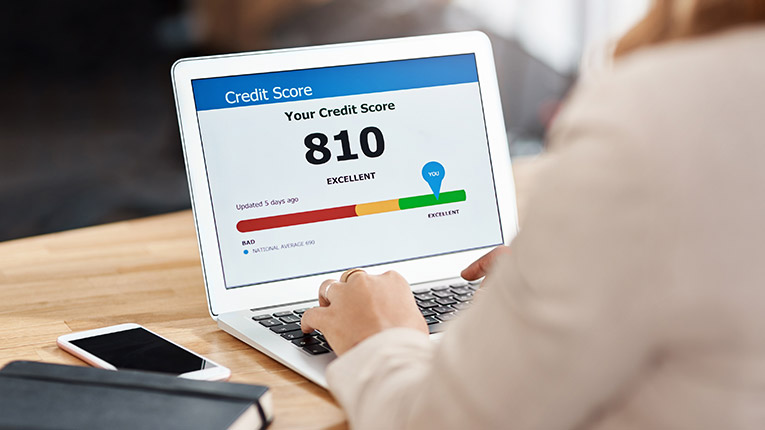
Most people only think about their credit score when they need it—right before a loan application, a lease, or a major purchase. By then, there’s usually not much you can do. A stronger score can open up better terms, lower annual percentage rates (APRs), and more options. The habits that get you there are simpler than most people expect—and the five below are the best place to start.
1. Pay every bill on time (35% of your FICO score)
Payment history is the single largest factor in your FICO score, accounting for 35% of the total calculation. Think of it like a report card that never resets. Every on-time payment quietly builds your record, and every missed one leaves a mark that may take years to fade. Once a payment is generally 30 or more days past due, it’s reported to the credit bureaus and can stay on your report for up to seven years. Pay consistently, and that same history works in your favor month after month.
How do you do this? Well, you can set autopay for the minimum due on every account so nothing slips through. Then use calendar reminders when you want to pay more on top. Put whatever extra you have each month toward the account with the highest APR. That’s the one costing you the most, and paying it down faster saves you money.
2. Lower your credit utilization (30% of your FICO score)
Credit utilization measures what you owe on your credit cards and other lines of credit as a percentage of your total available limit. It’s the second-largest factor in your credit score—and the one that moves fastest when you take action. Unlike a late payment, it leaves no lasting record. Pay a balance down, and the improvement shows up as soon as your lender reports the updated number to the bureaus.
Aim to keep utilization below 30% of your available limit. Below 10% is optimal for top credit scores. Here are two habits that help:
Avoid running balances close to your limit, even on a single card. High utilization on one account can pull your credit score down regardless of how low your overall ratio is.
Paying before that date, not the due date, is what actually moves the number the bureaus see.
Don’t close old cards you’re not using. Removing that available credit shrinks your total limit and pushes your ratio up.
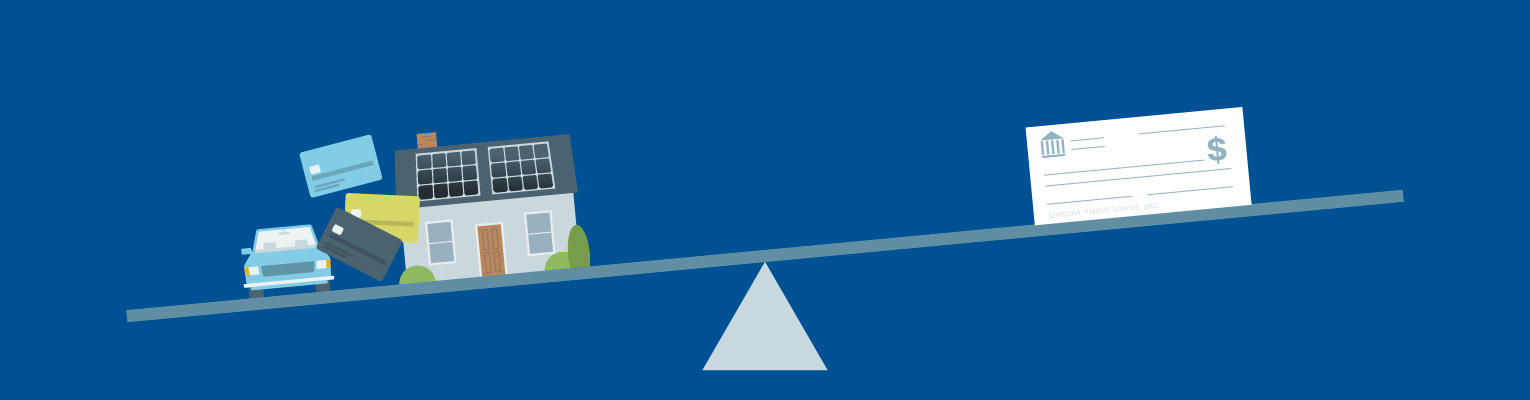
If you’re carrying high balances across multiple cards, consolidating them into a single personal loan.
3. Let your credit history grow (15% of your FICO score)
The age of your accounts makes up 15% of your FICO score. The longer your history, the stronger your track record—and the more options tend to open up.
Your oldest credit account does quiet work behind the scenes every month just by existing. It lengthens your average account age and keeps its credit limit in your utilization calculation. Close it, and you lose both.
Keep your older accounts open, especially your oldest one. You don’t need to spend on them: occasional small purchases, paid in full, are enough to keep the account active.
4. Be selective about new credit (10% of your FICO score)
New credit accounts for 10% of your FICO score. Each hard inquiry—the credit check that some lenders run when you formally apply—has an effect on your credit score. Inquiries stay on your credit report for two years, but FICO only counts those from the last 12 months in the calculation.
Opening several new accounts in a short period carries more weight than a single inquiry. It signals higher risk—particularly if your credit history is relatively short. Every new account also lowers your average account age, which affects the credit history factor.
Happen Bank’s rate check uses only a soft pull—no impact on your credit score, and your actual offers come back in seconds.1, 2 Your credit score is only affected if a loan is issued to you.
5. Round out your credit mix and track your progress (10% of your FICO score)
Credit mix makes up 10% of your FICO score. It’s the balance between revolving credit—like credit cards—and installment credit, like mortgages, car loans, and personal loans.
FICO doesn’t just look at whether you have both types—it looks at how you’ve managed them. A varied mix with a shaky payment history won’t help you. The mix matters less than what you’ve done with it.
So should you open a new account just to improve your credit mix? Probably not. Opening multiple new credit lines in a short period can signal financial distress. The drop in credit score from new inquiries and a lower average account age is rarely worth the marginal gain from a factor that only carries 10% of the weight. If your file already includes both revolving and installment accounts, you’re in good shape. Let the other four factors do the heavier lifting.
Credit factors carry different weight for different profiles
These five factors are a useful guide. What they are not is a rigid formula that applies universally. How much each one matters shifts depending on where you are in your credit journey. If you’re newer to credit, account age matters more. If you’ve never missed a payment, utilization is probably doing most of the work right now.
Your credit score isn’t frozen either. It updates as your habits change, and the factors interact differently as your file evolves. That’s not a reason to overthink it. The fundamentals hold up across almost every situation: pay on time, keep balances low, and don’t open accounts you don’t need.
Frequently asked questions
What habits improve your credit score the fastest?
Paying down revolving credit card balances is typically the fastest move. It reduces your utilization ratio—worth 30% of your score—and the improvement shows up as soon as your lender reports updated balances to the bureaus.
Can a personal loan help build my credit?
It can, for the right borrower. A personal loan adds an installment account to your credit mix and can build on-time payment history, as long as you keep up with monthly payments. For borrowers carrying high credit card balances, it can also lower your utilization ratio. With Happen Bank, borrowers who used Direct Pay to refinance 51% or more of qualifying revolving debt within the first three months saw an average FICO score improvement of +35 points (January–March 2025).3
Does checking my rate for a personal loan with Happen Bank affect my credit score?
No. Checking your rate at Happen Bank generates a soft inquiry on your credit report, which doesn’t affect your credit score. Your credit score is only affected if a loan is issued to you.2
How can I check my credit score for free?
Happen Bank’s DebtIQ tool (for existing customers) provides free credit score monitoring for members, along with debt management insights. You can also access your credit report from all three bureaus at no cost at AnnualCreditReport.com.
Related terms
Disclosures
Between April 2026 and June 2026, 76% of Happen Personal Loans offers were generated in under a minute from the beginning of the application process.
Checking a rate through us generates a soft inquiry on a person’s credit report, which does not impact that person’s credit score. A hard credit inquiry, which may affect that person’s credit score, only appears on the person’s credit report if and when a loan is issued to the person.
Between January 2025 and March 2025, borrowers who used Happen Bank’s Direct Pay to refinance 51% or more of qualifying debt within the first three months saw an average FICO score increase of 35 points. Reducing debt and maintaining low credit balances may contribute to an improvement in credit score, but results are not guaranteed by Happen Bank. Individual results vary based on multiple factors including but not limited to payment history and credit utilization. This data was collected during a period when Happen Bank operated as LendingClub.
You May Also Like