Personal loan vs. balance transfer for paying off credit card debt

If you’re carrying credit card debt and looking for a lower-cost way out, two options tend to come up: a balance transfer card and a personal loan. Both can reduce what you pay in interest. In this article, we’ll look closely at how they work.
How a balance transfer credit card works
A balance transfer moves debt from one credit card to another card that offers a 0% or low introductory APR for a set period, which can extend over 18 months in some cases. If you pay your balance off before the promotion ends, you may avoid interest altogether on the transferred amount (if the APR is 0%).
Two costs matter here:
Balance transfer fee. Most cards charge a fee to move a balance, typically ranging from 3% to 5% of the amount transferred. That fee gets added to the balance upfront.
The APR after the promotional period ends. Once the promo period ends, any unpaid balance starts collecting interest at the card's standard APR. As of the second quarter of 2026, the average credit card APR for cardholders who were charged interest was 20.94%.
A balance transfer doesn’t eliminate interest if the transferred balance is not repaid within the promotional period.
How a personal loan for credit card debt consolidation works
A personal loan is more straightforward. You borrow a lump sum, then repay it in fixed monthly payments over a set period. For a fixed-rate personal loan, the APR stays the same for the full loan term. There is no promotional APR that expires, and no anxiety over what happens when time runs out. There is no balance transfer fee either. However, other charges may apply, so it is recommended that all loan terms are carefully reviewed before making a decision. This works well if you want to know exactly what you owe each month and exactly when the loan ends. There’s no pressure to beat a deadline. With Happen Bank, you can also potentially get a discount on the standard APR by opting for Direct Pay.1 This allows your qualifying creditors to be paid directly, which is often more convenient.
Personal loan vs. balance transfer—Comparison
Here’s a quick overview of what we have discussed so far:
| Balance transfer card | Personal loan |
Rate structure | 0% introductory APR, then standard variable APR | Fixed APR for the full loan term; APR discount with Happen Bank’s Direct Pay1 |
Balance transfer fees | Typically, 3%–5% of transferred amount | None |
Credit impact | May add revolving credit*; utilization may increase | May add installment credit; can lower revolving utilization |
Worth considering for | Smaller balances you can confidently pay off within the promo window | Larger balances, longer payoff timelines, or when you want rate certainty |
*A type of credit that allows the borrower to make charges and payments against a set borrowing limit, paying interest only on outstanding balances.
Which option makes more sense for your situation
A balance transfer can be the cheaper move if your balance is manageable and you’re confident you can pay it off before the promo ends. A personal loan is typically beneficial if your payoff timeline is longer or your balance is too large to pay down within the promotional window. A fixed payment and a defined end date can remove the usual uncertainty. For many borrowers, that predictability can be worth more than the chance at 0%.
What to expect from a Happen Bank personal loan for credit card debt consolidation
Here are a few key advantages of consolidating credit card debt with a personal loan from Happen Bank:
Happen Bank’s Direct Pay option sends loan funds directly to your qualifying creditors. You may receive an APR discount of 0.75% to 8% off the standard APR for using Direct Pay.1
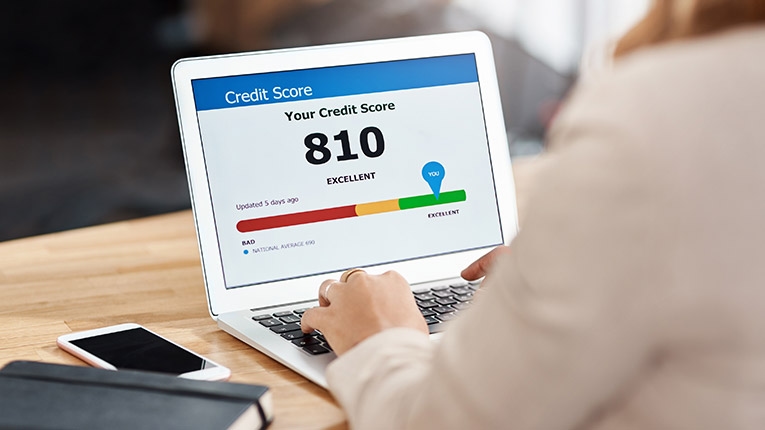
Consolidating debt with Happen Bank’s personal loans can produce an improvement in your FICO score. In fact, borrowers who used Direct Pay to refinance 51% or more of qualifying revolving debt within the first three months saw an average FICO score improvement of 35 points.2
Happen Bank charges no prepayment fees. If you pay down your loan ahead of schedule, you pocket the savings.
NerdWallet named Happen Bank its best personal loan for debt consolidation in 2026.
Check your rate in seconds.3
Frequently asked questions
Is a personal loan or balance transfer better for paying off credit card debt?
There is no clear standout winner. The answer depends on your balance and timeline. A balance transfer card can cost less for a smaller balance you can confidently pay off before the promotional period ends, once the transfer fee is factored in. A personal loan with a fixed APR is typically more predictable for larger balances or longer payoff timelines.
Does a balance transfer or a personal loan affect my credit score more?
Both options affect your credit profile, but in different ways. A balance transfer card adds a revolving account and may increase your overall credit utilization. A personal loan adds an installment account. An installment loan can reduce revolving credit utilization, which accounts for approximately 30% of your FICO score.
What happens if I don’t pay off my balance transfer before the introductory period ends?
You have to pay interest as per the standard APR on the remaining balance. If there’s a meaningful risk you won’t fully repay the balance within the promo window, ascertain the post-promotion APR, applicable fees, and other loan terms. Compare these terms with those of a fixed-rate personal loan before taking a decision.
Related terms
Disclosures
The APR discounted rate is a discount that some customers may receive for taking out a loan to pay down existing qualifying debt paid directly by Happen Bank; such rate is discounted from the rate given for taking a full cash loan. Not all applicants will qualify for the discount. Any actual discount rate will be determined at the time of application. The best APR discounts may be available to borrowers with excellent credit. Advertised discounted rates are subject to change without notice.
Between January 2025 and March 2025, borrowers who used Happen Bank's Direct Pay to refinance 51% or more of qualifying debt within the first three months saw an average FICO score increase of 35 points. Reducing debt and maintaining low credit balances may contribute to an improvement in credit score, but results are not guaranteed by Happen Bank. Individual results vary based on multiple factors including but not limited to payment history and credit utilization.
Between April 2026 and June 2026, 76% of Happen Personal Loan offers were generated in under a minute from the beginning of the application process.
You May Also Like