Debt-to-income ratio: what it is and how to improve yours before applying

Your DTI ratio changes when your debts change, when your income changes, or both. There are concrete steps you can take before you apply that can move it in the right direction. In this article, we cover what the metric is, what the generally accepted thresholds look like, and how to lower it.
What DTI measures, and what it doesn’t
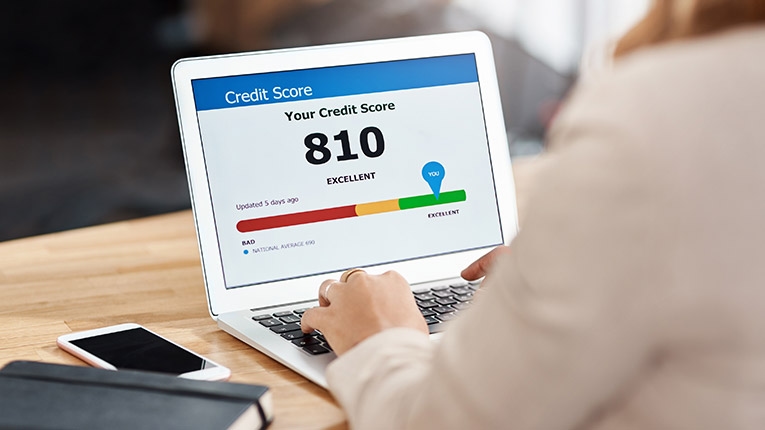
Your debt-to-income ratio is a snapshot of how much of your gross monthly income is already committed to debt repayment. A high DTI may signal that adding a new monthly payment may stretch your budget. A low DTI can signal that you have room to take on new debt. However, the specific threshold varies with the lender. Do note that your DTI doesn’t directly impact your FICO Score because your income is not considered when calculating your score. Your credit score and DTI are separate inputs to a lender’s decision.
Front-end vs. back-end DTI
For personal loans, only one type of DTI typically matters. But understanding both is useful for context.
Front-end DTI measures only housing costs—your mortgage or rent payment, property taxes, homeowners’ insurance—as a percentage of gross income. Mortgage lenders typically like to see a front-end DTI of 28% or less.
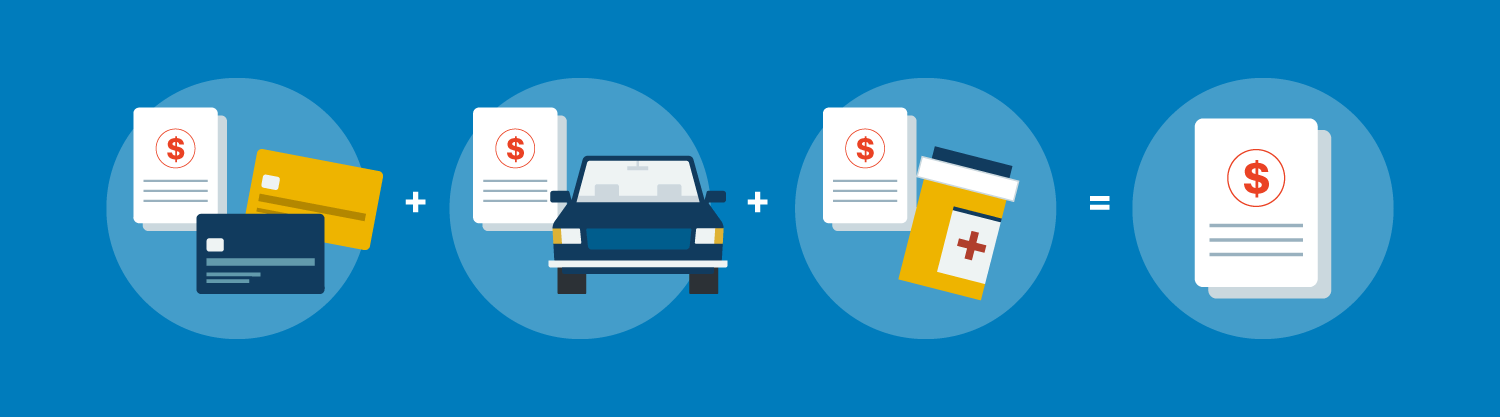
Back-end DTI is the measure typically used for personal loans. It includes all of your monthly debt obligations: credit card minimums, car loan payments, student loans, existing personal loans, and housing costs. A back-end DTI of 35% or less generally indicates that you’re managing your debt payments comfortably and have enough cash flow left over for other expenses and financial goals. Please note that none of these thresholds are set in stone. They vary depending on the lender.
How to calculate your DTI
Add up your fixed monthly debt obligations—using minimum payments for revolving credit such as credit cards:
Credit card minimum payments
Car loan monthly payment
Student loan monthly payment
Any existing personal loan payments
Rent or mortgage payment
Divide that total by your gross monthly income (before taxes and deductions). Multiply by 100. Example: Monthly debt payments of $1,800 ÷ gross monthly income of $5,500 = 0.327 × 100 = 32.7% DTI
What DTI thresholds mean for personal loan approval
There’s no universal DTI cutoff across all personal loan lenders. Thresholds vary by institution, loan type, and how your credit score and income interact with your ratio. However, here are some generic thresholds:
Below 36%: Generally associated with more competitive rate offers
36%–43%: Within the range where many lenders may still approve a loan
43%–50%: Approaches or exceeds thresholds used for qualified mortgages; personal loan lenders vary in how they evaluate this range
Above 50%: Options narrow significantly across most loan types.
Factors that may lower your DTI
Paying down revolving balances. Reducing a credit card balance can lower the minimum payment counted against your income. Eliminating a balance entirely can remove its minimum payment from the monthly total used in DTI calculations.
Paying off smaller installment debts. For borrowers in the final months of a car loan or personal loan, completing that payoff can remove a monthly obligation from the DTI calculation.
Not opening new credit before applying. Each new credit account adds a minimum payment to the calculation, which can increase DTI on paper regardless of whether the payment is manageable.
Higher verifiable income. Because DTI is calculated against gross income, a raise, a second income source, or documented freelance income shifts the ratio.
DTI vs. credit utilization: an important distinction
These metrics are related but measure different things and affect you differently.
Credit utilization is what you owe on revolving accounts relative to your available credit limit. It is a factor in your FICO score and appears on your credit report.
DTI, by contrast, has no impact on your credit score, particularly because your income isn’t a factor in credit-scoring models.
Check your rate in seconds with Happen Bank, with no impact to your credit score.1,2
Frequently asked questions
What is a good debt-to-income ratio for a personal loan?
The thresholds differ with each lender. A DTI of below 36% is generally considered good. A DTI of above 50% may require improvement, but the actual consequence depends on the lender and other factors that determine your creditworthiness.
Does DTI affect my credit score?
No. Your DTI doesn’t directly impact your FICO Score because your income is not considered when calculating your score.
What counts toward my DTI?
Minimum payments on credit cards and lines of credit, monthly payments on installment loans, and housing costs all count towards DTI. Utilities, groceries, insurance, and other non-debt living expenses usually don’t count.
Disclosures
Checking a rate through us generates a soft inquiry on a person’s credit report, which does not impact that person’s credit score. A hard credit inquiry, which may affect that person’s credit score, only appears on the person’s credit report if and when a loan is issued to the person.
Between April 2026 and June 2026, 76% of Happen Personal Loan offers were generated in under a minute from the beginning of the application process.
You May Also Like