{noun} Personal savings divided by disposable personal income, expressed as a percentage.
Savings Rate
January 29, 20234 min read
What Is a Savings Rate?
A savings rate is the percentage of disposable personal income that is set aside, or saved, instead of spent on the consumption of goods and services. Your savings rate is the money you set aside for a given period divided by your personal income net of taxes for that same period, expressed as a percentage. Your personal savings rate shows how much you save relative to how much money you have available to spend. The aggregate of individuals' savings rates is known as the national savings rate.
How Is a Savings Rate Calculated?
To calculate an annual savings rate, take your annual income, and subtract your personal current taxes paid in that year to get your annual disposable income. Next, subtract your annual spending from your annual disposable income to get your annual personal savings. Then, divide your personal savings for the year by your disposable income for the same period. The result is your personal savings rate for that year.
Annual Income – Annual Taxes = Annual Disposable Income
Annual Disposable Income – Annual Spending = Annual Personal Savings
Annual Personal Savings / Annual Disposable Income = Annual Savings Rate
A savings rate can be calculated for any time period, such as a month or a year.
Why Are Savings Rates Important?
Your savings rate shows how much of your income from that period you’ve saved or put aside as a nest egg or for retirement. In addition to saving for your retirement, building adequate savings is important because it can help you:
Prepare for emergencies. If you have savings to cover unexpected bills, you're less likely to take on potentially unmanageable debt.
Be ready for large expenses. College tuition, a down payment on a house, or vacation costs are easier to manage if you’ve saved ahead of time.
Personal Savings Rate
Knowing your personal savings rate allows you to measure progress toward your savings goals, and possibly, to see how well you’re doing at delaying gratification now to save for things you’ll want or need in the future. Knowing (and maintaining) your personal savings rate is an important part of making a household budget and can help you meet your financial goals.
National Savings Rate
The aggregate of individuals' savings rates, or the national savings rate, is important because national savings rates can affect demand for products, funds available for investment, and rates of economic growth for the economy as a whole. A sufficiently high national savings rate can help protect the economy against serious recessions.
What Is an Example of a Savings Rate?
Let’s say your gross income last year was $50,000, you paid $10,000 in personal taxes, and you spent $35,000 over the course of the year. In this scenario, your personal savings rate for the year was 12.5%.
Here’s how we got that. After taxes, you had $40,000 to spend. If you spent $35,000, the remaining $5,000 is considered savings. And $5,000 is 12.5% of $40,000.
$50,000 – $10,000 = $40,000
$40,000 – $35,000 = $5,000
5,000 / 40,000 = $12.5%
What Is a Good Personal Savings Rate?
One rule of thumb is to save 20% of your disposable income each month. This often repeated figure is aspirational because average personal savings rates have historically been much lower. Your ideal savings rate depends on your situation—you can benefit from saving even if it’s far less than 20%.
What Is a Negative Savings Rate?
A negative savings rate is when spending and expenses exceed disposable income for a specified period of time. A negative savings rate often results in needing to dip into savings or borrow money to get by.
For example, let’s say your annual gross income last year was $50,000, you paid $10,000 in taxes, and you spent $48,000 for the year. In this scenario, your personal savings rate for the year was negative: -20%.
Here’s how we got that. After taxes, you had $40,000 to spend. If you spent $48,000, that’s $8,000 more than your disposable income for the year. And -$8,000 is -20% of $40,000.
On an individual level, a negative savings rate can usually means you either have no savings and are taking on debt, or you’re drawing down savings to meet current consumption. Sometimes living paycheck to paycheck is all you can do. When your situation improves, consider making a habit out of putting something away for savings every week.
At a national level, a negative savings rate indicates a collective reduced ability to respond to economic shocks. In this case, if many people (or groups of people) abruptly change their spending and savings habits all at once (say, to start saving again), the result could be a drop in consumer demand that could negatively impact the economy.
What Counts as Personal Income?
When calculating a savings rate, personal income includes wages and self-employment income. It also includes dividends or interest and rent payments from tenants, as well as government benefits, like Social Security payments. Capital gains don't count as personal income for this calculation.
What Counts as Spending and Savings?
Spending is made up of all personal outlays other than taxes, including spending on goods and services, charitable donations, and interest payments.
Savings is the amount of money left over after spending. Savings also include investments.
How Have National Savings Rates Changed Over Time?
In the 1970s, the U.S. savings rate was around 10% to 13%. It gradually dropped to about 3% to 4% during the 2007-2008 global financial crisis. It rose to 7% by 2019, then shot up to 33.7% in 2020 after the Covid pandemic hit because stimulus checks boosted household income while lockdowns reduced opportunities to spend. By December 2022, the U.S. savings rate was back down to 3.4%.
How Can You Increase Your Savings Rate?
Start by creating a budget. See where you spend and where you could redirect dollars to savings.
Set up automatic transfers to a savings account. You could transfer money from a checking account on a regular schedule or have part of your paycheck deposited directly into savings.
Consider “round-up” programs. Programs that round up the dollar value of your purchases and save the change for you may help.
Save any unexpected income. Bonuses, raises or tax refunds can have a big impact on savings.
You May Also Like
Related Articles
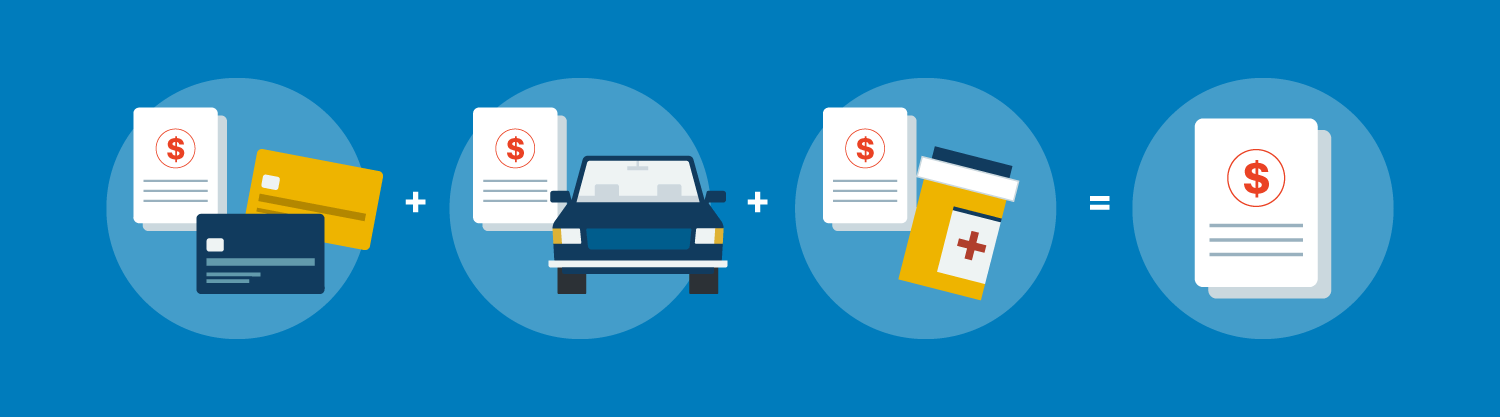
Debt consolidation replaces multiple high annual percentage rate (APR) balances with one fixed-APR personal loan. Before applying, knowing exactly what is owed, verifying that it actually saves money, checking your credit score, gathering documents, and checking your rate to see the actual APR before committing are important steps. This guide walks through each step in order.
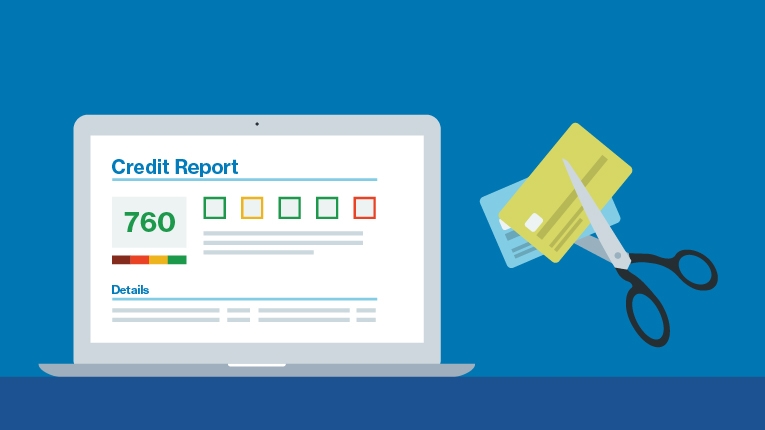
Debt consolidation combines multiple high-APR debts into a single payment—ideally at a lower APR, with a defined end date. It can help save money and simplify your finances, but whether it makes sense depends on your credit profile, the APR you can qualify for, and your ability to avoid new debt after consolidation.
Applying for a personal loan may affects your credit score differently at each stage of the process: from the initial rate check through to full repayment. A personal loan can affect a credit score positively or negatively over time, depending upon several factors.

When you consider taking out a personal loan, there are two ways in which your rate can be structured. The choice affects not just your monthly payment, but the total cost of borrowing over the full term, particularly if your loan runs several years.
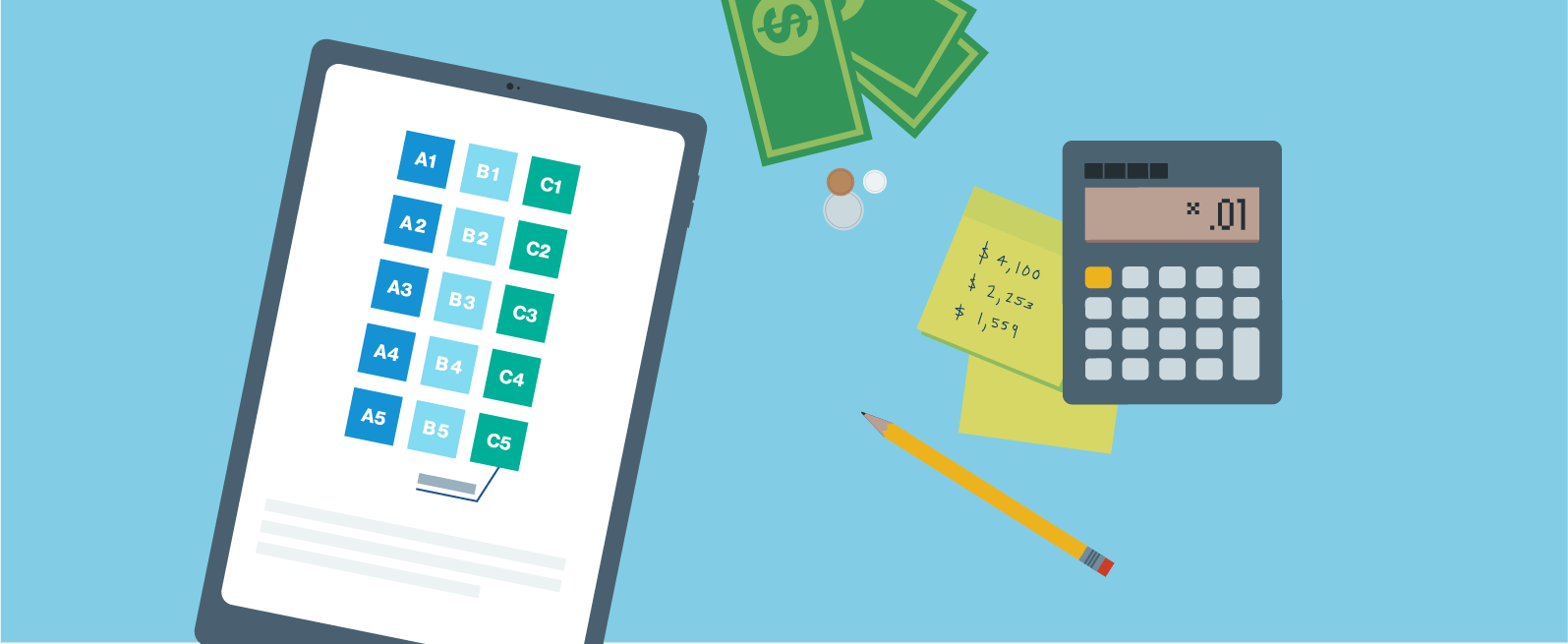
When people worry about debt consolidation hurting their credit, they’re usually thinking about how a loan application affects their credit score. What may negatively affect a credit score is a missed payment, a closed account that shortens your credit history, or new spending on the cards you just paid off.
Related Impact
Today, we are thrilled to announce the completion of our acquisition of Radius Bancorp, Inc. (“Radius”). In February 2020, we announced our intent to acquire Radius and shared how we can grow and deepen our customer relationships with a marketplace bank.

Today, we are thrilled to announce the completion of our acquisition of Radius Bancorp, Inc. (“Radius”). In February 2020, we announced our intent to acquire Radius and shared how we can grow and deepen our customer relationships with a marketplace bank.
Related FAQ's
You can view and manage most of your account information by signing in on the web or using the Happen Bank mobile app, including your password, phone number, physical address, loan documents, payment methods, and two-factor authentication settings.
Contact our team at 833-498-1399.
The Society for Worldwide Interbank Financial Telecommunication (SWIFT) Code is a unique identification code that may be required by some banks, broker-dealers, and investment managers for the completion of international wire transfers.
Personal Banking Customers: Our Elite and Reserve Tier customers can place a wire via Online banking or the Happen Bank Mobile app. For all other customers, they can reach out to Customer Service at 800.242.0272 to initiate a wire.
LevelUp Savings is a high-yield savings account that rewards you with a higher LevelUp Rate when you make deposits of at least $250 per statement cycle.
Related Glossary
{noun} A type of credit that allows the borrower to make charges and payments against a set borrowing limit, paying interest only on outstanding balances.
{noun} The amount of unpaid interest that has accumulated as of a specific date, either on a loan or an interest-bearing account or investment.
{noun} The total annual cost to borrow money, including fees, expressed as a percentage.
A debt that is written off as a loss because the financial institution or creditor believes it is no longer collectible due to a substantial period of nonpayment.
{noun} An interest rate that remains the same for a set time, usually for the life of the loan.