Interest rate vs. APR: What's the difference?

Key Takeaways
Interest rate is the cost of borrowing the principal loan amount and is affected by many factors, including rates set by the Fed and your credit history.
APR includes the interest rate, plus other fees and costs associated with a loan.
APR provides a more complete picture than interest rates of a loan’s total cost.
If you're planning on consolidating debt or making a big purchase, like buying a home or new car, you may be loan shopping. Understanding the true cost of a loan is key to getting the best deal possible — and most often starts with shopping interest rates and annual percentage rates (APRs) across different lenders.[1]
To comply with the federal Truth in Lending Act (TILA), lenders are required to disclose actual and potential charges associated with a loan to prospective borrowers, including interest rate and APR. Knowing the difference can help you find the best rate and fit for your needs and budget.[1]
What is interest rate?
An interest rate is the cost charged to borrow money until the balance is paid in full. Interest rates are shown as a percentage of the principal loan amount. You can expect to pay interest on installment loans like personal loans, auto loans, student loans, or mortgages. Interest also applies to revolving credit, such as credit cards.[1]
You can think of an interest rate as the primary price of borrowing money. Like other prices, interest rates rise and fall over time under a variety of economic influences. A major factor in the U.S. is the policy of the Federal Reserve (Fed) and its control of the federal funds rate — the interest rate banks charge each other for overnight loans. When the federal funds rate fluctuates, fixed-rate loans won’t change. But variable rates, which are common in credit cards, generally rise and fall.[1][2]
What is APR (annual percentage rate)?
APR, or annual percentage rate, represents the true cost of borrowing money on different types of installment loans — like mortgages, auto loans, personal loans, or student loans. Revolving credit, like credit cards and home equity lines of credit (HELOC) also have an APR.[1] [3]
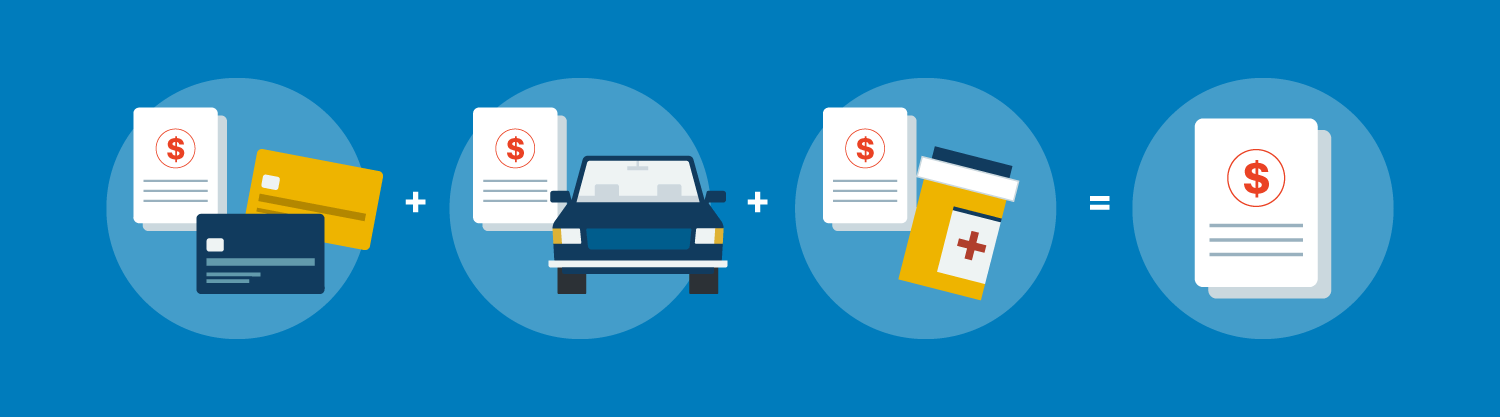
APR is expressed as a percentage and includes the total cost of fees and interest that you'll pay yearly on a loan. The composition of a given loan’s APR depends on the type of loan. For example, a mortgage APR includes the loan’s interest rate, plus any origination fees and closing costs. In some cases, a mortgage APR may also include mortgage points, when applicable. The APR on a personal loan, however, typically only includes the loan’s interest rate, plus any origination fees and closing costs.[1]
By factoring in those fees along with the interest rate, APR allows you to compare loan terms more transparently than you can by comparing interest rates alone.[1]
With revolving credit, however, interest rate and APR are the same, so you can use either one when comparing card offers.[3]
Interest rates vs APR: What’s the difference?
It’s important to consider both interest rates and APR when shopping around for installment loans, such as personal loans and mortgages, or revolving credit, like credit cards. While the rates may seem similar, it’s a good idea to note the key differences between these two types of rates. [1]
Here’s a closer look at how APR and interest rates compare:
Interest Rate | Annual Percentage Rate (APR) |
Percentage of the principal loan amount that the lender charges for the use of its money[1] | Total cost of a loan over the course of 12 months[1] |
Only includes the interest charged on the principal loan amount[1] | Interest rate plus additional loan charges, like origination fees, annual fees, and points[1] |
Expressed as a percentage[1] | Expressed as a percentage[1] |
Acts as the primary price of loans and credit, reflecting market rates, plus the lender’s pricing policies[1][2][4] | Best used to understand the total cost of an installment loan, especially when comparing loan offers between lenders[1][5] |
How are interest rates and APR calculated?
Interest rates and APR are calculated in similar ways, using different factors. But calculating these rates also varies, depending on the type of loan.
How interest rates are calculated
In general, interest rates are calculated as a percentage of the total loan amount, also known as the principal. For example, with personal loans or student loans, interest is often applied to the principal balance only. For instance, a $20,000 loan (60 month term) and with 15% interest rate will cost you around $8500 in interest over the life of the loan. Interest on credit cards, however, is applied to the total balance owed, plus any existing interest you’ve accrued. This is referred to as compound interest.
How is APR calculated?
APR on a loan with simple interest is calculated using a special formula that takes into account factors, including the principal, interest rate, fees, length of the loan term. For example, the APR on an $18,000 loan with a 14% interest rate and 6% origination fee ($1080) repaid over four years is about 16%.
APR calculations can be complicated (and they’re even trickier when compound interest is involved), so it's often a good idea to use an APR calculator or ask your lender to break down the calculations for you.
Can you lower your interest rate and APR?
Factors that affect your interest rate and APR, include the rates set by the Fed, fees charged by the lender, the loan amount, and repayment term. When determining rates, lenders also consider your credit, repayment history, and debt-to-income ratio. People with good credit generally qualify for better rates than those with less-than-perfect credit histories.[1][2]
Shopping around with different lenders can help you find the lowest rate. Just be sure to compare APR, rather than interest rates, to get a complete picture of what you can expect to pay for the total life of the loan. If you’re already locked into a loan, it’s unlikely you’ll be able to lower your interest rate or APR.[5]
But you may be able to save some money by making extra payments or paying the loan off early. Before changing your payment schedule, it’s a good idea to check with your lender to make sure payments can go to the principal and double check that you won’t be hit with any penalty fees.
If your credit score has improved, refinancing your existing loan may be an option. With a new loan you may be able to secure a lower interest rate and APR. Before you opt to refinance, it’s important to compare refinance rates and fees.
The bottom line
Interest rates and APR are both rates that can help you understand the cost of borrowing money when you take out a loan. Though these two terms are often used interchangeably , they’re actually quite different.[1]
Remember, a loan’s interest rate only offers a partial view of the cost of borrowing, while APR gives you the total cost of the loan over time. Understanding these two different rates and how they’re calculated can help provide a clear picture of how much taking out a loan is going to cost you.[1]
Consumer Financial Protection Bureau. “What is the difference between a loan interest rate and the APR?”
Board of Governors of the Federal Reserve System. “Consumer Credit - G.19.”
Consumer Financial Protection Bureau. “What is a credit card interest rate? What does APR mean?”
Office of the Comptroller of Currency. “Truth in Lending.”
Consumer Financial Protection Bureau. “My payday lender said my loan would cost 15 percent but my loan documents say the annual percentage rate (APR) is almost 400 percent. What is an APR on a payday loan and how should I use it?”
You May Also Like