Is personal loan interest tax deductible?

Key takeaways:
Personal loans are generally not tax-deductible unless for business, education, or investments.
Interest on student loans, mortgages, and business loans may be tax deductible.
If a creditor forgives part of your loan, you might need to include the forgiven amount in your taxable income
Tax planning is essential for informed financial decisions.
In most cases, you cannot get a tax deductible interest on personal loans. You may not deduct interest expenses from an unsecured personal loan unless the loan is for business expenses, qualified education expenses, or eligible taxable investments.
Taxes may not be the most exciting thing you'll ever do, but if you have a personal loan, knowing the potential tax implications can help when it comes time to file your return.
The good news: There is no set personal loan tax. However, knowing when and how a personal loan might impact your taxes can help ensure you don’t miss out on any potential deductions. Here is what you need to know:
Are personal loans tax deductible?
In most cases, no, however, there are a few exceptions to the rule. You can get tax-deductible interest on personal loans if you use the loan proceeds for business expenses, qualified education expenses, or eligible taxable investments. If you do not use the loan for one of these reasons, then a personal loan won’t affect your taxes.
Why don’t personal loans affect your taxes?
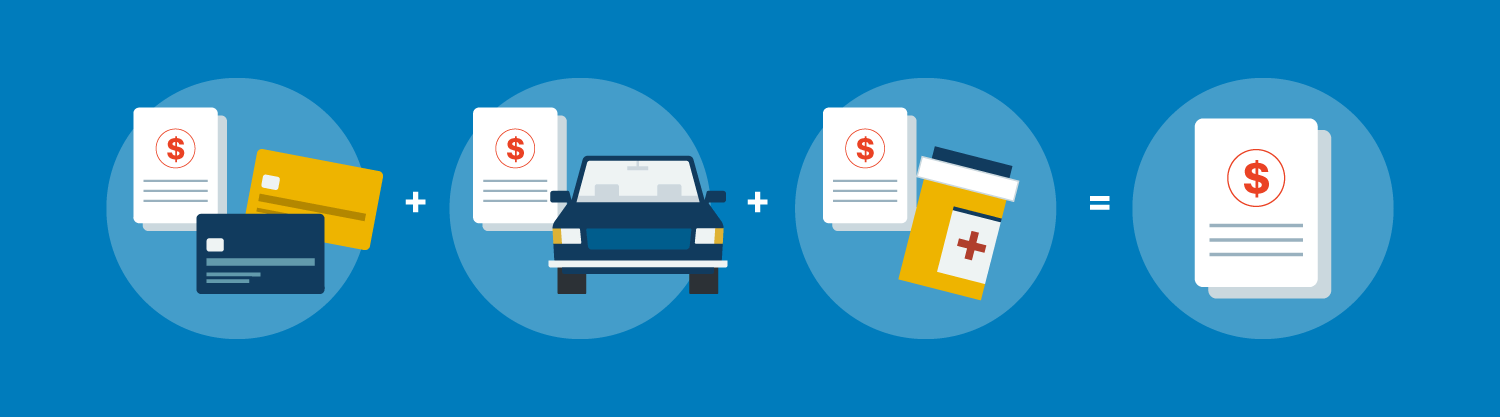
A personal loan could help you save money by consolidating high-interest debt, or provide the funds you need to pay for an emergency or unexpected expense. While there are exceptions, generally, personal loans don’t affect your taxes.
1. It's not income
The money you receive from a personal loan isn’t added to your taxable income, which means that the borrower does not have to pay taxes.
2. It's for personal use
Personal loans are often for personal use, and you generally don’t get to deduct personal expenses.
3. Even when allowed, only interest is tax deductible
Some types of loans can qualify for a tax deduction. Generally, you can deduct only the interest portion you pay on the loan (and sometimes origination fees in the case of student loans, for example), not the loan amount.
When can you get tax deductible interest on loans?
Depending on how you use the funds, there are a few circumstances when you can get tax deductable interest on personal loans.
For example, if you take out a loan solely to pay for qualified education expenses or to refinance a student loan, you may be able to claim the student loan interest deduction.
Similarly, you may also be able to take an investment interest expense or business expense deduction if you used a personal loan for these purposes. However, some lenders and lending marketplaces (like Happen Bank, formerly LendingClub) may not allow you to take out a personal loan for these types of purchases.
Additionally, an unsecured personal loan won’t qualify for mortgage-related deductions because the loan isn’t secured by your home. This is true even if you take out the loan for home improvements.
4 types of loans with tax-deductible interest
You can get a tax deductible interest on certain types of loans if you meet all the criteria. According to the IRS, you can get a tax deductible interest on the following loans:
Interest on outstanding student loans
Interest on mortgages & second mortgages
Investment interest expenses
Interest on business loans
1. Student loans
If you took out student loans for qualified higher education expenses, you may be able to deduct up to $2,500 in interest payments each year. For the interest deduction, qualified expenses may include tuition, fees, lodging, textbooks, and other necessary expenses. The definition varies for certain higher education tax credits. You can take this deduction even if you don’t itemize. However, you can’t take the deduction if you use the married filing separately status or if someone can claim you or your spouse as a dependent. The deduction also phases out based on your modified adjusted gross income.
2. Mortgages
While the Tax Cuts and Jobs Act of 2017 created new rules for deducting mortgage interest payments, it didn’t get rid of the deduction altogether. Individuals can still deduct interest on mortgages when they use the money to buy, build, or improve a home. For example, if you paid mortgage interest points, those payments can also be deductible. In both cases, if you qualify, you must itemize your deductions to benefit. The law limits how much interest you may be able to deduct. Now, you can deduct interest on up to $375,000 worth of mortgage debt (or, $750,000 if you’re married and file jointly). Higher limits of $500,000 and $1,000,000 apply if you took out the mortgage before December 16, 2016.
3. Second mortgages
Interest payments on second mortgages, such as a home equity loan (HEL) or home equity line of credit (HELOC) may also be deductible. However, the mortgage value limit applies to the combined balance of your first and second mortgages. To qualify, you need to use the proceeds from the loan to substantially improve the home by increasing its value or extending its life. In other words, building an addition might qualify, but making purely cosmetic changes that don’t increase its value wouldn’t.
4. Investment interest expenses
The investment interest deduction is an itemized deduction for the interest you pay if you borrow money to buy an eligible taxable investment. For example, you may be able to claim the deduction if you have a brokerage account and took out a margin loan to buy stocks. Buying tax-advantaged municipal bonds won’t count.
If you qualify, the deduction is limited to the net investment income you earned at your ordinary income tax rate. You may be able to carry over interest expenses if you can’t claim the full deduction this year.
5. Business loans
If you run a business or are self-employed, you may be able to deduct the interest you pay on a business loan (or the portion of a personal loan) you use for business purposes. To qualify, you must:
Be liable for the debt
Intend to repay the debt, and the credit must be expected to be repaid
Have a true debtor-creditor relationship
For example, if a family member offers to give you money to start a business and you later decide to repay the gift plus interest that won’t count. If you take out a personal loan to buy supplies and equipment for your business, then you may be able to deduct your interest payment. Or, for example, you take out an auto refinance loan for a vehicle that you use for business half the time. You may be able to deduct half of the interest on the loan.
How does canceled personal loan debt affect your taxes?
If a creditor cancels, discharges, or forgives part of your debt, the portion of the loan that you didn’t repay may be considered taxable income. Often, this occurs if you fall behind on payments and agree to a settlement with the creditor. The creditor will send you a Form 1099-C, Cancellation of Debt, which shows how much debt was canceled. You may need to include the canceled debt in your income and pay taxes on the amount. However, there are exceptions, and you may be able to exclude the amount from your income if you’re insolvent (i.e., your liabilities exceed your assets).
The bottom line
With the potential tax consequences in mind, you can be more strategic about when and why you take out a loan. In particular, small-business owners can benefit, as some loans may qualify them for a deduction even if they use only a portion of the proceeds for business expenses. Remember, tax planning is a year-round process and an important part of managing your personal finances. Many individuals often think about using a tax refund to pay down debt. However, a better approach might be to use a more reliable source of funds—such as a personal loan.
FAQs
Are loan repayments tax deductible?
No, loan repayments on personal loans, auto loans, and credit card debt are not tax-deductible.
What kind of personal expenses are tax deductible?
The top personal expenses that remain tax deductible for individuals include mortgage interest, student loan interest, charitable donations, medical expenses, 401(k) and IRA contributions, and certain education expenses. Most of these can only be taken if you file an itemized tax return.
You May Also Like